Organisation of Islamic Cooperation
The Collective Voice of The Muslim World
Date: 03/12/2011
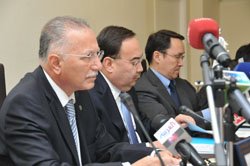 At the emergency meeting of the OIC Executive Committee at the level of foreign ministers on the situation in Syria, opposite views were expressed on approaching the issue. While Iran favored giving the Syrian Government more time to resolve the crisis, Turkey and many of the other participants urged for immediate end to the violence and the implementation of reforms.
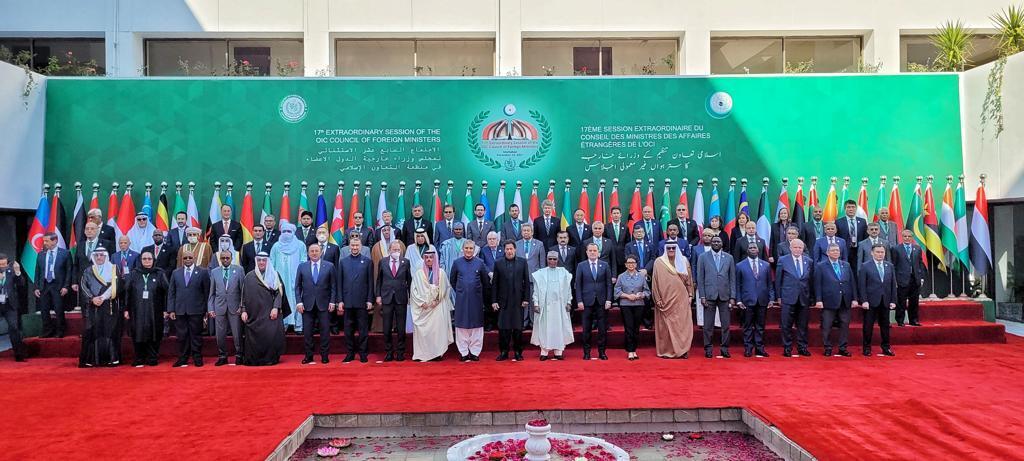
The meeting, held at the headquarters of the Organization of Islamic Cooperation (OIC) in Jeddah on November 30, 2011, was attended by 32 Member States, 11 of them represented by the foreign minister including Syria, Qatar, Iran, Turkey, Senegal, Kazakhstan, Chad, and Egypt.
Speaking to the OIC Journal at the end of the meeting, Iranian Foreign Minister Ali Akbar Salehi said that Iran is not defending the Syrian Government, rather, it is a matter of principle, which is that Iran supports the legitimate demands of people uprising in any country and the government of that country should comply with those demands, but Iran is against interferences in the internal affairs of those countries. He questioned the haste and urgency in taking action against Syria when it has already declared that it will deliver on reforms, revise its constitution and allow elections. He does not think that the approach taken is conducive to resolving the problem but will perhaps complicate it further. He suggested that a committee be formed- headed by the OIC Secretary General- follow up the matter and work to bring all the factions together for dialogue to resolve the issue.
The Turkish Foreign Minister Ahmet Davutoglu meanwhile said to the OIC Journal that the outcome of the meeting gives the right message to the Syrian regime. “We hope that the Syrian administration will consider this friendly, brotherly advice and warning, and we will continue to follow up on it,” he added.
The Qatari Premier and Foreign Minister Sheikh Hamad bin Jassem Al-Thani commented that the OIC position is clear and resembles that of the Arab League.
The Secretary General of the 57-member OIC said the OIC would try to resolve the political crisis in Syria internally and oppose moves to take the issue to the UN Security Council.
“We are keen to preserve Syria's safety, security and stability, reject the internationalization of the Syrian crisis and we work to resolve the crisis within the broader Islamic family as represented by the OIC,” Ekmeleddin Ihsanoglu said.
Addressing the meeting, Ihsanoglu expressed frustration at the lack of a breakthrough to end the violence in Syria.
“We have exhausted all our mechanisms and powers in our attempt to bridge the gap and end bloodshed" in Syria, said the OIC chief, urging ministers to "reach practical recommendations that would help achieve a compromising solution."
He called on the government of President Bashar Assad to cooperate with the Arab League.
Under the terms of an Arab League deal aimed at ending the violence, Syria agreed to withdraw the army from urban areas, release political prisoners, launch a dialogue with the opposition and admit foreign observers.
The Arab League approved on Sunday sweeping sanctions against Assad's government over the crackdown. The measures include an immediate ban on transactions with Damascus and its central bank and a freeze on Syrian government assets in Arab countries. They also bar Syrian officials from visiting Arab countries and a possible call for suspension of all flights from Arab states to be implemented on a date to be set next week.
The meeting was attended by Syrian Foreign Minister Walid Muallem who gave a government version of the situation in Syria, saying his country was the victim of terrorist operations. He also pointed out that the Assad government was working on a modern constitution as part of new political reforms.
The final communiqué of the meeting voiced grave concern over the deteriorating situation in Syria and regretted the loss of lives.
The ministers urged the Syrian Government to stop the excessive use of force against citizens, respect human rights and fulfill its commitment toward the OIC Charter. They also urged Damascus to carry out political reforms in line with the hopes and aspirations and legitimate demands of the Syrian people.
The meeting called upon all parties to relinquish violence and resort to peaceful means such as dialogue and negotiations to end the crisis. It also welcomed the Arab League’s efforts to find a peaceful solution for the Syrian issue, and encouraged the Syrian Government to sign the Protocol presented by the Arab League. The meeting also called on the Syrian authorities to put an end to the human rights violations and to allow access to the Islamic and international humanitarian agencies.
The Syrian and Iranian delegations expressed reservations on some points of the communiqué.
At the emergency meeting of the OIC Executive Committee at the level of foreign ministers on the situation in Syria, opposite views were expressed on approaching the issue. While Iran favored giving the Syrian Government more time to resolve the crisis, Turkey and many of the other participants urged for immediate end to the violence and the implementation of reforms.
The meeting, held at the headquarters of the Organization of Islamic Cooperation (OIC) in Jeddah on November 30, 2011, was attended by 32 Member States, 11 of them represented by the foreign minister including Syria, Qatar, Iran, Turkey, Senegal, Kazakhstan, Chad, and Egypt.
Speaking to the OIC Journal at the end of the meeting, Iranian Foreign Minister Ali Akbar Salehi said that Iran is not defending the Syrian Government, rather, it is a matter of principle, which is that Iran supports the legitimate demands of people uprising in any country and the government of that country should comply with those demands, but Iran is against interferences in the internal affairs of those countries. He questioned the haste and urgency in taking action against Syria when it has already declared that it will deliver on reforms, revise its constitution and allow elections. He does not think that the approach taken is conducive to resolving the problem but will perhaps complicate it further. He suggested that a committee be formed- headed by the OIC Secretary General- follow up the matter and work to bring all the factions together for dialogue to resolve the issue.
The Turkish Foreign Minister Ahmet Davutoglu meanwhile said to the OIC Journal that the outcome of the meeting gives the right message to the Syrian regime. “We hope that the Syrian administration will consider this friendly, brotherly advice and warning, and we will continue to follow up on it,” he added.
The Qatari Premier and Foreign Minister Sheikh Hamad bin Jassem Al-Thani commented that the OIC position is clear and resembles that of the Arab League.
The Secretary General of the 57-member OIC said the OIC would try to resolve the political crisis in Syria internally and oppose moves to take the issue to the UN Security Council.
“We are keen to preserve Syria's safety, security and stability, reject the internationalization of the Syrian crisis and we work to resolve the crisis within the broader Islamic family as represented by the OIC,” Ekmeleddin Ihsanoglu said.
Addressing the meeting, Ihsanoglu expressed frustration at the lack of a breakthrough to end the violence in Syria.
“We have exhausted all our mechanisms and powers in our attempt to bridge the gap and end bloodshed" in Syria, said the OIC chief, urging ministers to "reach practical recommendations that would help achieve a compromising solution."
He called on the government of President Bashar Assad to cooperate with the Arab League.
Under the terms of an Arab League deal aimed at ending the violence, Syria agreed to withdraw the army from urban areas, release political prisoners, launch a dialogue with the opposition and admit foreign observers.
The Arab League approved on Sunday sweeping sanctions against Assad's government over the crackdown. The measures include an immediate ban on transactions with Damascus and its central bank and a freeze on Syrian government assets in Arab countries. They also bar Syrian officials from visiting Arab countries and a possible call for suspension of all flights from Arab states to be implemented on a date to be set next week.
The meeting was attended by Syrian Foreign Minister Walid Muallem who gave a government version of the situation in Syria, saying his country was the victim of terrorist operations. He also pointed out that the Assad government was working on a modern constitution as part of new political reforms.
The final communiqué of the meeting voiced grave concern over the deteriorating situation in Syria and regretted the loss of lives.
The ministers urged the Syrian Government to stop the excessive use of force against citizens, respect human rights and fulfill its commitment toward the OIC Charter. They also urged Damascus to carry out political reforms in line with the hopes and aspirations and legitimate demands of the Syrian people.
The meeting called upon all parties to relinquish violence and resort to peaceful means such as dialogue and negotiations to end the crisis. It also welcomed the Arab League’s efforts to find a peaceful solution for the Syrian issue, and encouraged the Syrian Government to sign the Protocol presented by the Arab League. The meeting also called on the Syrian authorities to put an end to the human rights violations and to allow access to the Islamic and international humanitarian agencies.
The Syrian and Iranian delegations expressed reservations on some points of the communiqué.