Organisation of Islamic Cooperation
The Collective Voice of The Muslim World
Date: 18/05/2010
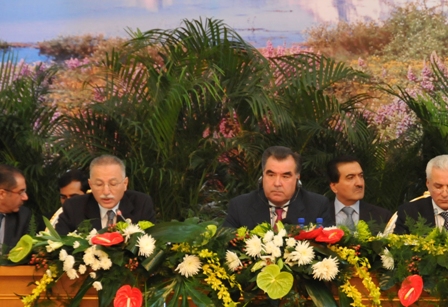 DUSHANBE– REPUBLIC OF TAJIKISTAN
4-6 JUMADUL THANI 1431 H
(18-20 MAY 2010)
Honourable Ministers,
Excellencies,
Ladies and Gentlemen,
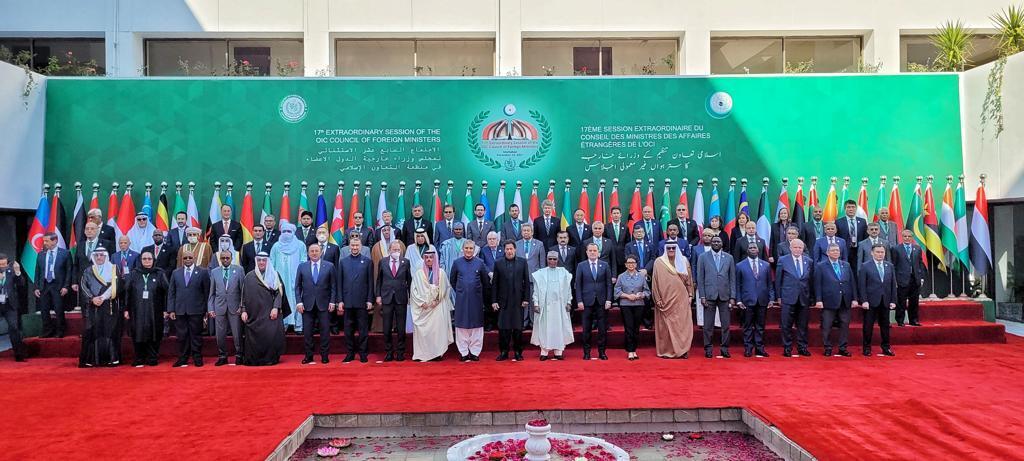
I am deeply honoured and privileged to welcome you at the opening of this important 37th Session of the OIC Council of Foreign Ministers, hosted in this beautiful city of Dushanbe, Republic of Tajikistan.
I avail myself of this opportunity to salute the people of Tajikistan. My thanks and gratitude go to His Excellency Emomali Rahman, the honourable leader of this great country, for patronizing this important conference, and for the enormous efforts he and his government have deployed to ensure the adequate and smooth running of the proceedings of this ministerial meeting.
I would also like to put on record our thanks and gratitude to the Syrian Arab Republic, its people and government, for their dedicated and constructive efforts in hosting the 36th OIC Council of Foreign Ministers. We also acknowledge and value their chairing of the subsequent activities and meetings, as well as for their positive contribution to the consolidation of the joint Islamic action over the past year.
Honourable Ministers
Excellencies, Ladies and Gentlemen
Allow me at the outset, and as the OIC has moved to a new headquarter in Jeddah, put at our disposal by a generous gesture of the Custodian of the Two Holy Mosques His Majesty King Abdullah of Saudi Arabia, I would like on behalf of all of you to record our deep thanks, appreciation and gratitude to His Majesty and to the government of Saudi Arabia. The new premises allows us to work in more comfortable surrounding and more favourable atmosphere. This noble gesture is supplemented by His Majesty’s most generous gift of building a new, up to date and splendid headquarter for the Organisation. The work on this superb edifice is progressing. I would like, in this context, to renew to the Custodian of the Two Holy mosques, on your behalf, our gratefulness and sincere gratitude.
Before I go to any other business, I would like to share with you the sadness and sorrow on the passing away of the late Nigerian President Umaru Musa YARADUA, who died on 5th May 2010 as a result of long illness. At this sad occasion I would like on behalf of all member states to express to the people and government of Nigeria and the family of the defunct President our profound and sincere condolences at this great loss to Nigeria, the family of the OIC and Africa.
The late President YERADUA will be always remembered for his vision and commitment to deepen Nigeria’s OIC relations, and for his valuable services to the Ummah. He has devoted great attention to the question of peace and security in Africa and beyond, and was keen to consolidate democracy and good governance in his country and in OIC Member States. We fondly remember his sincere friendship and wise leadership as a great statesman. We pray to God to bestow His mercy upon him. I would like you to join me in reciting the Fatiha on his soul.
Honourable Ministers
Excellencies, Ladies and Gentlemen
The Dushanbe meeting is all the more important as it is the first CFM held in one of OIC Member States from Central Asia, which joined our ranks after achieving their independence. We warmly welcome them, and pin the hope that the five Muslim sister countries, given their glorious past in enriching Islamic civilization, will become a driving force to strengthen our organization and consolidate Islamic solidarity.
The chronicles of the history of Islam bear an eloquent testimony to the abounding wealth of cultural and the edifying legacy, conferred to the Islamic civilization, by the illustrious sons of this region of Islamic world, who were true trailblazers of ingenuity in knowledge and scholarship it is this knowledge and scholarship that prompted one of the renowned and acclaimed sons of this region, Abu Abdullah Jaafar Rodaki known as the Sultan of poets, to say during the mid of the 3rd Hijri century the following:-
دانش اندر دل چراغ روشن است
وز همه بد، بر تن تو جوشن است
“It is knowledge and scholarship that kindle the flame of the heart, and with this illumination shield from evil, all humans”.
Today, we meet in Dushanbe at a crucial time of the history of Islam and Muslims. At this defining moment we stand at a critical cross-road. We are facing daunting challenges which target our identity, our faith, our culture, our interests, and more importantly, our destiny. In the face of this mounting menace, I have committed myself to summon all my energy and resources, and those of my colleagues in the General Secretariat, to do our utmost - at our level - to stand up to these challenges.
Beginning from the interior front, and over the last few years, we have made it possible for the standard of the Organisation to expand and broaden in scope, extent and amplitude. The long awaited reforms of the Organisation have already taken roots. The activities of the General Secretariat were enhanced and diversified. Innovative approaches to better conduct our works were introduced. As a result, OIC performance has witnessed instant rise in serving and championing Muslim causes and concerns. The stature of the Organisation, in the eyes of the world, has been raised and elevated. Our voice became more respected, and our efficacy became firmly entrenched.
A remarkable achievement was realized when we have managed to consolidate and unify the voting pattern of our member states in international fora, on core issues of interest. In so doing, we have created a powerful voting block of our 57 countries, making their approval almost indispensible for the adoption of major international decisions or resolutions. In this context, I would like to seize this opportunity to appeal to Your Excellencies, to urge your representatives in international fora to stay the course in respecting the voting pattern agreed upon by the OIC official meetings, or by the OIC groups abroad.
Honourable Ministers,
Excellencies, Ladies and Gentlemen,
Over the past few years, and in a bid to stem the tide of Islamophobia, we undertook direct contacts with many members of Western Foreign Ministers. We approached senior officials, academics and intellectuals in Europe and the United States. Among those contacted are Foreign Ministers of Switzerland, France, Germany, Denmark, United Kingdom, Spain, Holland, Finland and the USA. These efforts also included the ranking officials of the relevant International Organisations in the West. Among those addressed, are the European Union, the Organisation of the Security and Cooperation in Europe (OSCE), Human Rights Institutions, UNESCO, Research Centres, and fora of dialogue among civilization based in the West, and UN “alliance of civilization” with which we have concluded a Memorandum of Understanding.
As for the United States, we took advantage of Mr. Obama election as President to address to him an open letter at the first day of his inauguration. In this letter we conveyed to him a plea of goodwill through ushering in a new era of mutual understanding and cooperation between his country and the Muslim world. Our call met with positive response manifested in President Obama speech at Cairo University. Our contact with the American side continued unabated at high level. I met U.S. Secretary of State Mrs. Hillary Clinton at the U.S. State department in Washington D.C. alongwith a high ranking OIC delegation. Very fruitful discussion took place on issues pertaining to the Muslim world and Muslim causes. A top priority was reserved for the questions of Palestine, Jerusalem, Afghanistan, Islamophobia etc.
Mrs. Clinton returned our visit by visiting the OIC headquarters in Jeddah at the head of U.S. high-level delegation on 16 February 2010. An important meeting took place, addressing the major issues of the Muslim world. She also introduced, on this occasion, Mr. Rashad Hussain the new special Envoy of President Barak Obama to the OIC.
These activities were supplemented by numerous contacts with eminent U.S. figures from civil societies, research centers and think tanks in both New York and Washington D.C. Among them Brooking Institution, U.S. Institute for peace in Washington, George Town University and the U.S. National Press Club and wide range of similar centers. These activities has had positive effects on the relations between the Muslim world and the U.S. in particular.
Honourable Ministers
Ladies and Gentlemen
We were gravely upset by the decision to ban the building of minarets in Switzerland, which came as a result of a referendum approved by the Swiss people, and became a law. I had many meetings with the Swiss Foreign Minister on this issue since 2007. The Swiss government indicated that they were against the ban, but cannot reverse the outcome of the referendum. We perceived this act as an ominous paradigm shift, raising the manifestations of Islamophobia in Europe from the level of individuals to that of laws. It has also institutionalized and constitutionalised prejudice against Muslims and contravened Muslims’ human rights regarding their liberty of religion.
We have called for a meeting of the permanent representatives of member states, which convened on January 31st. The meeting denounced the new Swiss law as a discriminatory act that should be repealed. The new Swiss law has engendered grave ramification. In fact, the hate wave against Islam and Muslim immigrants became a “political commodity” and a “winning chip” in the hands of political parties during their election campaigns. Given the gravity of the situation and as we look and work for the future, I would like to say that achieving any real progress in this area needs a direct and dedicated interaction on the part of Member States with the officials of the West. I would, therefore, suggest that a high level ministerial meeting be convened to evolve an Islamic plan for interaction with the West, regarding Islamophobia, and defending our just causes and in facing up to the mounting hate wave against Islam. I also suggest that the question of Islamophobia be included in all member states’ interactions with their Western counterparts.
Honourable Ministers
Excellencies, Ladies and Gentlemen,
The situation in Palestine and the city of Al Quds Al Sharif are going from bad to worse since the coming to power of the Israeli radical right-wing parties. Those parties came with a declared agenda to confiscate the maximum of the Palestinian occupied territories, building settlement on them, and completing the judausation of the holy city of Al Quds.
The new situation calls for a firm and united stand on the part of all Muslim countries, before it is too late. At our level we have held a ministerial meeting of the OIC Executive Committee on the first of November 2009 to examine this serious matter. We dispatched a joint OIC/IDB mission to Al Quds to gain information on the general conditions in the sectors of housing, education, health and the social status of the Palestinians in East Jerusalem. We started to finance certain priority projects in the vital sectors of that holy city. Moreover, I sent urgent messages to scores of Ministers of leading countries of the world drawing their attention to the unfolding and explosive new situation there.
In the aftermath of the Israeli aggression on Gaza strip, we sent relief caravans and medical supplies to the inhabitants of the strip. On the political front we have called for an urgent meeting of the UN Human Right Council to examine the Israeli aggression. We succeeded in convincing the Council to dispatch a UN fact finding mission to Gaza, led by the International Judge Goldstein. We worked hard to have the report of Judge Goldstein adopted by the Council and to be referred to the United Nations as a preliminary step towards handing it over to the international Criminal Court.
In Iraq, we have welcomed the legislative elections which was carried out in adequate manners. We regret that forming a new government has entered in a protracted process of contentions. I would like to appeal to the Iraqi leadership to cooperate and join forces in setting up a new government, and avoid creating any political vacuum during this critical and unstable circumstances.
The situation in Somalia is still very elucive and perilous. The onslaught of the rebel groups has foiled all attempts to put an end to the civil strife. We hosted at the OIC headquarters the 16th Meeting of the UN International Contact Group on Somalia in December last. I appeal to all Member States to extend every material and political support to the Somali strategic plan for 2010 on recovery and construction. Another high segment meeting of UN international contact group on Somalia is scheduled to be held in Istanbul during this month.
We feel tormented to see Afghanistan going through the agony of a protracted war since more than eight years. I have already declared that the military approach in Afghanistan will not yield a lasting solution. The solution in our view resides in reaching a comprehensive settlement that combines the political, economic, social and cultural dimensions on the ground. Afghanistan needs a joint Islamic effort. I would be happy to receive proposals to that effect from member states. I think that the proposal of the United Arab Emirates to designate an OIC special envoy to Afghanistan and to reopen the OIC Office in Kabul is pertinent and worthy of considering. From my side I have had a number of contacts with Afghanistan neighbouring countries to set up a joint regional committee, whose task would be to help in establishing a process that would facilitate the efforts leading to reconciliation. This action may pave the way to reaching solution, promoting peace, and favouring development and reconstructions.
As for Sudan, we have welcomed and appreciated the progress achieved by the Doha peace process in Darfur to which the OIC was a party. We have also welcomed the legislative and Presidential elections which took place in the Sudan. It is our hope that this election will move Sudan forward on the road of democracy. As Sudan is heading toward an important referendum next year, I would like to appeal to all Sudanese to earnestly rally their efforts to preserve the unity of their country. On the other hand, I would like to state that the OIC along with the governments of Egypt and Turkey have co-organized a donor conference for the benefit of development and reconstructure in Darfur. Almost nine hundred million dollars were pledged to that purpose.
In Kashmir, the OIC has constantly expressed its concern over the absence of any significant progress in implementing the U.N. Security Council decision on the right of self-determination of the Kashmiri people. A new representative of the OIC Secretary General for Jammu and Kashmir was recently nominated, and will be visiting the area in the near future. And as for Azerbaijan, we support the territorial integrity of Azerbaijan, and call for speedy implementation of the relevant UN Security Council on this issue.
Honourable Ministers,
Excellencies
The case of Muslim minorities and communities outside OIC Member States attracts our attention and interest. In this context we carry out a wide range of contacts with senior officials in host countries and with the representative of Islamic communities outside the OIC Member States. Among the key activities figuring in this domain are, inter alia, the situations in the Southern Philippine and Thailand. Moreover, we put forth serious efforts to look after the Muslim minorities in Europe, North America, the region of the Caucasus, the Turkish minority in Western Thrace, autonomous province of Uygur, Bulgaria, Myanmar etc.
Honourable Ministers
Excellencies, Ladies and Gentlemen,
In the economic field, we have been able to develop the necessary framework for a common regime of preferences, with the entry into force on 5 February 2010 of the Protocol on the Preferential Tariff Scheme (PRETAS). With this success, we have been able to lay the necessary foundation for an integrated OIC economic system. The volume of intra-trade among Member States has grown from 14.5% in 2004 to 16.60% in 2009.
It is my hope that the resumption of the trade negotiation rounds, after the coming into force of the additional agreement on the Rule of Origin, would reinforce our collective desire to create a dynamic multilateral framework for a real economic cooperation and coordination in the OIC Member States. This will give expression to the vision of creating a growth–oriented and vibrant economy in the OIC Member States. The last session of COMCEC and the Economic Summit which were held consecutively in Istanbul to commemorate the 25th anniversary of the establishment of this committee had rekindled the hopes of attaining the various targets set for the consolidation of material cooperation and solidarity in action among Member States. In this context, I would like to hail the efforts of the government of Turkey for its unceasing support in facilitating trade negotiations which yielded concrete results.
Poverty alleviation remains one of the key themes of the OIC economic cooperation agenda. The various poverty alleviation programmes have continued to address the condition of the poor and vulnerable groups of our countries. I should also mention the ongoing efforts to implement the Dakar –Port Sudan Railway Project, which remains one of our flagship projects, following the success of the ministerial meeting of the 13th countries participating in the project which was held in Khartoum.
I would like at this juncture to commend the efforts of the OIC institutions and organs such as the COMCEC, the Islamic Development Bank, the Islamic Centre for the Development of Trade, the Statistical, Economic and Social Research and training Centre for Islamic Countries, and the Islamic Chamber of Commerce and Industry.
As for the OIC humanitarian activities, it is worth noting that the institutional work has been completed for the establishment of the Department of Humanitarian Affairs (ICHAD). To this end, many initiatives and activities have been undertaken in the Swat Valley in Pakistan, Burkina Faso, Niger, Comoros, Darfur, Somalia, Banda Aceh in Indonesia, Bosnia Herzegovina, Gaza, Yemen and Sierra Leone. Furthermore, it is worth noting that more intra-OIC coordinated efforts are needed to increase awareness with regard to natural disasters.
The Islamic Solidarity Fund has witnessed a new fresh start after the nomination of a new Executive Director. The new agreements concluded with various philanthropic organizations on cooperation and mutual financings of some projects have enhanced the capacity of the fund allowing it to further its activities in many domains and in many OIC countries. This was possible thanks to the generous contributions of a number of OIC member states. I would like to appeal to the Member States that did not contribute to the fund to do so.
I would like to invite your kind attention to the utmost importance we attach to implementing the Ten Year Programme of Action. And you are no doubt aware that proper implementation of this Programme is a unique historical occasion for the Islamic Ummah, and for its progress and development to meet the challenges of our time.
At the level of the General Secretariat, we have proceeded on implementing almost all the required tasks assigned to us by the Ten Years Programme of Action. A new Charter had been written, examined, adopted and entered into force and signed by 41 Member States. Then we turned to discharge our duties of implementing the new requirement of the new charter such as the establishment of independent permanent commission of human rights and the draft rules on observer status. Consensus texts were drafted and thoroughly examined by official experts of Member States and are ready for your consideration. The establishment of the independent permanent commission on human right will be hailed and well received mainly human right circles. It will be a major achievement in the annals of the OIC.
Excellencies,
Distinguished Delegates,
Dialogue among civilizations is central and a priority on the OIC’s agenda. We have remained focused on and have participated in various fora to highlight the importance of dialogue in combating intolerance and hatred. We have welcomed and supported the initiative of His Majesty the Custodian of the Two Holy Mosques on interfaith dialogue and disseminated its message through our activities on dialogue among civilizations. The initiative is, rightly, considered the highest and most effective one presented by the Muslim world. It has obtained wide spread recognition and acclaim. We have also engaged with leading Western organizations in this field, including the Organization for Security and Cooperation in Europe (OSCE), the Office for Democratic Institutions and Human Rights (ODHIR). We remain closely involved with the UN Alliance of Civilizations (AoC) with a view to strengthening dialogue among civilizations. The signing of a Memorandum of Understanding and the visit of the AoC High Representative, Mr Jorge Sampao, to the OIC General Secretariat in Jeddah, bear testimony to the growing cooperation between the OIC and the AoC.
In this context, the OIC has called for and hosted the 1st Meeting of the AoC Focal Points of the OIC Member States last month. I am pleased to inform you that the General Secretariat is also actively involved in holding a sideline event during the 3rd AoC Annual Forum to be held in Rio de Janeiro later this month in cooperation with the Council of Bureau Turkey and Spain. Another seminar on Islamophobia will be held during the OSCE meeting in Astana to be held in next June. On the same lines, we are taking measures to intensify our engagement with the international media. We will organize this year a follow up on the 2007 Baku Media Conference to be held under the title: “Media as Bridge among Civilizations”. We have completed the restructuring of the International Islamic News Agency (IINA) and are currently in the process of finalizing the restructuring of the Islamic States Broadcasting Union (ISBU).
Excellencies,
Distinguished Delegates,
The General Secretariat took the initiative in drawing up the OIC draft Plan of Action for Advancement of Women (OPAAW), which was deliberated by Member States and adopted by the last Council of Foreign Ministers session. In the same vein, the Council has also approved the establishment of a Women Development Organization to be based in Cairo. I am confident that the draft statute of the organization will be adopted by the present meeting. Another Ministerial Conference on “Women’s Role in Development of OPIC Member States,” will also be held in Iran during this year, while similar activities took place concerning youth and children.
On the other hand, we have managed to upgrade the performance of the two OIC Universities in Niger and Kampala as well as the Islamic University of Technology in Dhaka. I would also like to praise the efforts of the OIC organs active in the field of cultural and social affairs, particularly the International Islamic Fiqh Academy, ISESCO, IRCICA, Islamic Solidarity Sports Federation and the Islamic Conference Youth Forum on Dialogue and Cooperation (ICYF-DC).
Distinguished Ladies and Gentlemen,
In the field of Dawa, the OIC has sought to bring together Islamic institutions and organizations specialized in Dawa activities under its umbrella in the framework of the Committee on the Coordination of Joint Islamic Action in the Field of Dawa. This Coordination Committee has started to put in place a number of executive programmes, including the establishment of a short wave and FM radio station to broadcast to Africa. The seventeenth session of the Coordination Committee to be held in Brazil in May 2010, will consider Dawa issues in Latin America.
In the field of Science and Technology, a meeting took place recently at the General Secretariat and brought together OIC specialized institutions on science and technology, higher education, health and the environment. The aim of the meeting was to review achievements and assess challenges facing the General Secretariat.
Our leaders recognized the urgent need to bridge the gap between our Member States and the advanced countries and decided in the OIC Ten Years Programme of Action to allocate 2% of their GDP for investment in Research and Development. We have also success stories in the area of health which include eradication of polio, and malaria campaign as well as in the domain of mother and child care.
All the aforementioned progress and achievements were possible thanks to your trust in us, and thanks to your wise guidance and sound decisions and resolutions. We can only promise you to stay the course, redouble our efforts and deepen our dedication to work deligently on all levels and in all fields. The present international context in which we act is not easy. It is crammed and riddled with hardships, adversity and challenges. The only arm in our hands is our unity, loyalty to our causes, and the solidarity that we display here whenever we take common decision or action. But above all and what remains more paramount is our profound believe in our Ummah, its greatness and strength and in its bright future.
DUSHANBE– REPUBLIC OF TAJIKISTAN
4-6 JUMADUL THANI 1431 H
(18-20 MAY 2010)
Honourable Ministers,
Excellencies,
Ladies and Gentlemen,
I am deeply honoured and privileged to welcome you at the opening of this important 37th Session of the OIC Council of Foreign Ministers, hosted in this beautiful city of Dushanbe, Republic of Tajikistan.
I avail myself of this opportunity to salute the people of Tajikistan. My thanks and gratitude go to His Excellency Emomali Rahman, the honourable leader of this great country, for patronizing this important conference, and for the enormous efforts he and his government have deployed to ensure the adequate and smooth running of the proceedings of this ministerial meeting.
I would also like to put on record our thanks and gratitude to the Syrian Arab Republic, its people and government, for their dedicated and constructive efforts in hosting the 36th OIC Council of Foreign Ministers. We also acknowledge and value their chairing of the subsequent activities and meetings, as well as for their positive contribution to the consolidation of the joint Islamic action over the past year.
Honourable Ministers
Excellencies, Ladies and Gentlemen
Allow me at the outset, and as the OIC has moved to a new headquarter in Jeddah, put at our disposal by a generous gesture of the Custodian of the Two Holy Mosques His Majesty King Abdullah of Saudi Arabia, I would like on behalf of all of you to record our deep thanks, appreciation and gratitude to His Majesty and to the government of Saudi Arabia. The new premises allows us to work in more comfortable surrounding and more favourable atmosphere. This noble gesture is supplemented by His Majesty’s most generous gift of building a new, up to date and splendid headquarter for the Organisation. The work on this superb edifice is progressing. I would like, in this context, to renew to the Custodian of the Two Holy mosques, on your behalf, our gratefulness and sincere gratitude.
Before I go to any other business, I would like to share with you the sadness and sorrow on the passing away of the late Nigerian President Umaru Musa YARADUA, who died on 5th May 2010 as a result of long illness. At this sad occasion I would like on behalf of all member states to express to the people and government of Nigeria and the family of the defunct President our profound and sincere condolences at this great loss to Nigeria, the family of the OIC and Africa.
The late President YERADUA will be always remembered for his vision and commitment to deepen Nigeria’s OIC relations, and for his valuable services to the Ummah. He has devoted great attention to the question of peace and security in Africa and beyond, and was keen to consolidate democracy and good governance in his country and in OIC Member States. We fondly remember his sincere friendship and wise leadership as a great statesman. We pray to God to bestow His mercy upon him. I would like you to join me in reciting the Fatiha on his soul.
Honourable Ministers
Excellencies, Ladies and Gentlemen
The Dushanbe meeting is all the more important as it is the first CFM held in one of OIC Member States from Central Asia, which joined our ranks after achieving their independence. We warmly welcome them, and pin the hope that the five Muslim sister countries, given their glorious past in enriching Islamic civilization, will become a driving force to strengthen our organization and consolidate Islamic solidarity.
The chronicles of the history of Islam bear an eloquent testimony to the abounding wealth of cultural and the edifying legacy, conferred to the Islamic civilization, by the illustrious sons of this region of Islamic world, who were true trailblazers of ingenuity in knowledge and scholarship it is this knowledge and scholarship that prompted one of the renowned and acclaimed sons of this region, Abu Abdullah Jaafar Rodaki known as the Sultan of poets, to say during the mid of the 3rd Hijri century the following:-
دانش اندر دل چراغ روشن است
وز همه بد، بر تن تو جوشن است
“It is knowledge and scholarship that kindle the flame of the heart, and with this illumination shield from evil, all humans”.
Today, we meet in Dushanbe at a crucial time of the history of Islam and Muslims. At this defining moment we stand at a critical cross-road. We are facing daunting challenges which target our identity, our faith, our culture, our interests, and more importantly, our destiny. In the face of this mounting menace, I have committed myself to summon all my energy and resources, and those of my colleagues in the General Secretariat, to do our utmost - at our level - to stand up to these challenges.
Beginning from the interior front, and over the last few years, we have made it possible for the standard of the Organisation to expand and broaden in scope, extent and amplitude. The long awaited reforms of the Organisation have already taken roots. The activities of the General Secretariat were enhanced and diversified. Innovative approaches to better conduct our works were introduced. As a result, OIC performance has witnessed instant rise in serving and championing Muslim causes and concerns. The stature of the Organisation, in the eyes of the world, has been raised and elevated. Our voice became more respected, and our efficacy became firmly entrenched.
A remarkable achievement was realized when we have managed to consolidate and unify the voting pattern of our member states in international fora, on core issues of interest. In so doing, we have created a powerful voting block of our 57 countries, making their approval almost indispensible for the adoption of major international decisions or resolutions. In this context, I would like to seize this opportunity to appeal to Your Excellencies, to urge your representatives in international fora to stay the course in respecting the voting pattern agreed upon by the OIC official meetings, or by the OIC groups abroad.
Honourable Ministers,
Excellencies, Ladies and Gentlemen,
Over the past few years, and in a bid to stem the tide of Islamophobia, we undertook direct contacts with many members of Western Foreign Ministers. We approached senior officials, academics and intellectuals in Europe and the United States. Among those contacted are Foreign Ministers of Switzerland, France, Germany, Denmark, United Kingdom, Spain, Holland, Finland and the USA. These efforts also included the ranking officials of the relevant International Organisations in the West. Among those addressed, are the European Union, the Organisation of the Security and Cooperation in Europe (OSCE), Human Rights Institutions, UNESCO, Research Centres, and fora of dialogue among civilization based in the West, and UN “alliance of civilization” with which we have concluded a Memorandum of Understanding.
As for the United States, we took advantage of Mr. Obama election as President to address to him an open letter at the first day of his inauguration. In this letter we conveyed to him a plea of goodwill through ushering in a new era of mutual understanding and cooperation between his country and the Muslim world. Our call met with positive response manifested in President Obama speech at Cairo University. Our contact with the American side continued unabated at high level. I met U.S. Secretary of State Mrs. Hillary Clinton at the U.S. State department in Washington D.C. alongwith a high ranking OIC delegation. Very fruitful discussion took place on issues pertaining to the Muslim world and Muslim causes. A top priority was reserved for the questions of Palestine, Jerusalem, Afghanistan, Islamophobia etc.
Mrs. Clinton returned our visit by visiting the OIC headquarters in Jeddah at the head of U.S. high-level delegation on 16 February 2010. An important meeting took place, addressing the major issues of the Muslim world. She also introduced, on this occasion, Mr. Rashad Hussain the new special Envoy of President Barak Obama to the OIC.
These activities were supplemented by numerous contacts with eminent U.S. figures from civil societies, research centers and think tanks in both New York and Washington D.C. Among them Brooking Institution, U.S. Institute for peace in Washington, George Town University and the U.S. National Press Club and wide range of similar centers. These activities has had positive effects on the relations between the Muslim world and the U.S. in particular.
Honourable Ministers
Ladies and Gentlemen
We were gravely upset by the decision to ban the building of minarets in Switzerland, which came as a result of a referendum approved by the Swiss people, and became a law. I had many meetings with the Swiss Foreign Minister on this issue since 2007. The Swiss government indicated that they were against the ban, but cannot reverse the outcome of the referendum. We perceived this act as an ominous paradigm shift, raising the manifestations of Islamophobia in Europe from the level of individuals to that of laws. It has also institutionalized and constitutionalised prejudice against Muslims and contravened Muslims’ human rights regarding their liberty of religion.
We have called for a meeting of the permanent representatives of member states, which convened on January 31st. The meeting denounced the new Swiss law as a discriminatory act that should be repealed. The new Swiss law has engendered grave ramification. In fact, the hate wave against Islam and Muslim immigrants became a “political commodity” and a “winning chip” in the hands of political parties during their election campaigns. Given the gravity of the situation and as we look and work for the future, I would like to say that achieving any real progress in this area needs a direct and dedicated interaction on the part of Member States with the officials of the West. I would, therefore, suggest that a high level ministerial meeting be convened to evolve an Islamic plan for interaction with the West, regarding Islamophobia, and defending our just causes and in facing up to the mounting hate wave against Islam. I also suggest that the question of Islamophobia be included in all member states’ interactions with their Western counterparts.
Honourable Ministers
Excellencies, Ladies and Gentlemen,
The situation in Palestine and the city of Al Quds Al Sharif are going from bad to worse since the coming to power of the Israeli radical right-wing parties. Those parties came with a declared agenda to confiscate the maximum of the Palestinian occupied territories, building settlement on them, and completing the judausation of the holy city of Al Quds.
The new situation calls for a firm and united stand on the part of all Muslim countries, before it is too late. At our level we have held a ministerial meeting of the OIC Executive Committee on the first of November 2009 to examine this serious matter. We dispatched a joint OIC/IDB mission to Al Quds to gain information on the general conditions in the sectors of housing, education, health and the social status of the Palestinians in East Jerusalem. We started to finance certain priority projects in the vital sectors of that holy city. Moreover, I sent urgent messages to scores of Ministers of leading countries of the world drawing their attention to the unfolding and explosive new situation there.
In the aftermath of the Israeli aggression on Gaza strip, we sent relief caravans and medical supplies to the inhabitants of the strip. On the political front we have called for an urgent meeting of the UN Human Right Council to examine the Israeli aggression. We succeeded in convincing the Council to dispatch a UN fact finding mission to Gaza, led by the International Judge Goldstein. We worked hard to have the report of Judge Goldstein adopted by the Council and to be referred to the United Nations as a preliminary step towards handing it over to the international Criminal Court.
In Iraq, we have welcomed the legislative elections which was carried out in adequate manners. We regret that forming a new government has entered in a protracted process of contentions. I would like to appeal to the Iraqi leadership to cooperate and join forces in setting up a new government, and avoid creating any political vacuum during this critical and unstable circumstances.
The situation in Somalia is still very elucive and perilous. The onslaught of the rebel groups has foiled all attempts to put an end to the civil strife. We hosted at the OIC headquarters the 16th Meeting of the UN International Contact Group on Somalia in December last. I appeal to all Member States to extend every material and political support to the Somali strategic plan for 2010 on recovery and construction. Another high segment meeting of UN international contact group on Somalia is scheduled to be held in Istanbul during this month.
We feel tormented to see Afghanistan going through the agony of a protracted war since more than eight years. I have already declared that the military approach in Afghanistan will not yield a lasting solution. The solution in our view resides in reaching a comprehensive settlement that combines the political, economic, social and cultural dimensions on the ground. Afghanistan needs a joint Islamic effort. I would be happy to receive proposals to that effect from member states. I think that the proposal of the United Arab Emirates to designate an OIC special envoy to Afghanistan and to reopen the OIC Office in Kabul is pertinent and worthy of considering. From my side I have had a number of contacts with Afghanistan neighbouring countries to set up a joint regional committee, whose task would be to help in establishing a process that would facilitate the efforts leading to reconciliation. This action may pave the way to reaching solution, promoting peace, and favouring development and reconstructions.
As for Sudan, we have welcomed and appreciated the progress achieved by the Doha peace process in Darfur to which the OIC was a party. We have also welcomed the legislative and Presidential elections which took place in the Sudan. It is our hope that this election will move Sudan forward on the road of democracy. As Sudan is heading toward an important referendum next year, I would like to appeal to all Sudanese to earnestly rally their efforts to preserve the unity of their country. On the other hand, I would like to state that the OIC along with the governments of Egypt and Turkey have co-organized a donor conference for the benefit of development and reconstructure in Darfur. Almost nine hundred million dollars were pledged to that purpose.
In Kashmir, the OIC has constantly expressed its concern over the absence of any significant progress in implementing the U.N. Security Council decision on the right of self-determination of the Kashmiri people. A new representative of the OIC Secretary General for Jammu and Kashmir was recently nominated, and will be visiting the area in the near future. And as for Azerbaijan, we support the territorial integrity of Azerbaijan, and call for speedy implementation of the relevant UN Security Council on this issue.
Honourable Ministers,
Excellencies
The case of Muslim minorities and communities outside OIC Member States attracts our attention and interest. In this context we carry out a wide range of contacts with senior officials in host countries and with the representative of Islamic communities outside the OIC Member States. Among the key activities figuring in this domain are, inter alia, the situations in the Southern Philippine and Thailand. Moreover, we put forth serious efforts to look after the Muslim minorities in Europe, North America, the region of the Caucasus, the Turkish minority in Western Thrace, autonomous province of Uygur, Bulgaria, Myanmar etc.
Honourable Ministers
Excellencies, Ladies and Gentlemen,
In the economic field, we have been able to develop the necessary framework for a common regime of preferences, with the entry into force on 5 February 2010 of the Protocol on the Preferential Tariff Scheme (PRETAS). With this success, we have been able to lay the necessary foundation for an integrated OIC economic system. The volume of intra-trade among Member States has grown from 14.5% in 2004 to 16.60% in 2009.
It is my hope that the resumption of the trade negotiation rounds, after the coming into force of the additional agreement on the Rule of Origin, would reinforce our collective desire to create a dynamic multilateral framework for a real economic cooperation and coordination in the OIC Member States. This will give expression to the vision of creating a growth–oriented and vibrant economy in the OIC Member States. The last session of COMCEC and the Economic Summit which were held consecutively in Istanbul to commemorate the 25th anniversary of the establishment of this committee had rekindled the hopes of attaining the various targets set for the consolidation of material cooperation and solidarity in action among Member States. In this context, I would like to hail the efforts of the government of Turkey for its unceasing support in facilitating trade negotiations which yielded concrete results.
Poverty alleviation remains one of the key themes of the OIC economic cooperation agenda. The various poverty alleviation programmes have continued to address the condition of the poor and vulnerable groups of our countries. I should also mention the ongoing efforts to implement the Dakar –Port Sudan Railway Project, which remains one of our flagship projects, following the success of the ministerial meeting of the 13th countries participating in the project which was held in Khartoum.
I would like at this juncture to commend the efforts of the OIC institutions and organs such as the COMCEC, the Islamic Development Bank, the Islamic Centre for the Development of Trade, the Statistical, Economic and Social Research and training Centre for Islamic Countries, and the Islamic Chamber of Commerce and Industry.
As for the OIC humanitarian activities, it is worth noting that the institutional work has been completed for the establishment of the Department of Humanitarian Affairs (ICHAD). To this end, many initiatives and activities have been undertaken in the Swat Valley in Pakistan, Burkina Faso, Niger, Comoros, Darfur, Somalia, Banda Aceh in Indonesia, Bosnia Herzegovina, Gaza, Yemen and Sierra Leone. Furthermore, it is worth noting that more intra-OIC coordinated efforts are needed to increase awareness with regard to natural disasters.
The Islamic Solidarity Fund has witnessed a new fresh start after the nomination of a new Executive Director. The new agreements concluded with various philanthropic organizations on cooperation and mutual financings of some projects have enhanced the capacity of the fund allowing it to further its activities in many domains and in many OIC countries. This was possible thanks to the generous contributions of a number of OIC member states. I would like to appeal to the Member States that did not contribute to the fund to do so.
I would like to invite your kind attention to the utmost importance we attach to implementing the Ten Year Programme of Action. And you are no doubt aware that proper implementation of this Programme is a unique historical occasion for the Islamic Ummah, and for its progress and development to meet the challenges of our time.
At the level of the General Secretariat, we have proceeded on implementing almost all the required tasks assigned to us by the Ten Years Programme of Action. A new Charter had been written, examined, adopted and entered into force and signed by 41 Member States. Then we turned to discharge our duties of implementing the new requirement of the new charter such as the establishment of independent permanent commission of human rights and the draft rules on observer status. Consensus texts were drafted and thoroughly examined by official experts of Member States and are ready for your consideration. The establishment of the independent permanent commission on human right will be hailed and well received mainly human right circles. It will be a major achievement in the annals of the OIC.
Excellencies,
Distinguished Delegates,
Dialogue among civilizations is central and a priority on the OIC’s agenda. We have remained focused on and have participated in various fora to highlight the importance of dialogue in combating intolerance and hatred. We have welcomed and supported the initiative of His Majesty the Custodian of the Two Holy Mosques on interfaith dialogue and disseminated its message through our activities on dialogue among civilizations. The initiative is, rightly, considered the highest and most effective one presented by the Muslim world. It has obtained wide spread recognition and acclaim. We have also engaged with leading Western organizations in this field, including the Organization for Security and Cooperation in Europe (OSCE), the Office for Democratic Institutions and Human Rights (ODHIR). We remain closely involved with the UN Alliance of Civilizations (AoC) with a view to strengthening dialogue among civilizations. The signing of a Memorandum of Understanding and the visit of the AoC High Representative, Mr Jorge Sampao, to the OIC General Secretariat in Jeddah, bear testimony to the growing cooperation between the OIC and the AoC.
In this context, the OIC has called for and hosted the 1st Meeting of the AoC Focal Points of the OIC Member States last month. I am pleased to inform you that the General Secretariat is also actively involved in holding a sideline event during the 3rd AoC Annual Forum to be held in Rio de Janeiro later this month in cooperation with the Council of Bureau Turkey and Spain. Another seminar on Islamophobia will be held during the OSCE meeting in Astana to be held in next June. On the same lines, we are taking measures to intensify our engagement with the international media. We will organize this year a follow up on the 2007 Baku Media Conference to be held under the title: “Media as Bridge among Civilizations”. We have completed the restructuring of the International Islamic News Agency (IINA) and are currently in the process of finalizing the restructuring of the Islamic States Broadcasting Union (ISBU).
Excellencies,
Distinguished Delegates,
The General Secretariat took the initiative in drawing up the OIC draft Plan of Action for Advancement of Women (OPAAW), which was deliberated by Member States and adopted by the last Council of Foreign Ministers session. In the same vein, the Council has also approved the establishment of a Women Development Organization to be based in Cairo. I am confident that the draft statute of the organization will be adopted by the present meeting. Another Ministerial Conference on “Women’s Role in Development of OPIC Member States,” will also be held in Iran during this year, while similar activities took place concerning youth and children.
On the other hand, we have managed to upgrade the performance of the two OIC Universities in Niger and Kampala as well as the Islamic University of Technology in Dhaka. I would also like to praise the efforts of the OIC organs active in the field of cultural and social affairs, particularly the International Islamic Fiqh Academy, ISESCO, IRCICA, Islamic Solidarity Sports Federation and the Islamic Conference Youth Forum on Dialogue and Cooperation (ICYF-DC).
Distinguished Ladies and Gentlemen,
In the field of Dawa, the OIC has sought to bring together Islamic institutions and organizations specialized in Dawa activities under its umbrella in the framework of the Committee on the Coordination of Joint Islamic Action in the Field of Dawa. This Coordination Committee has started to put in place a number of executive programmes, including the establishment of a short wave and FM radio station to broadcast to Africa. The seventeenth session of the Coordination Committee to be held in Brazil in May 2010, will consider Dawa issues in Latin America.
In the field of Science and Technology, a meeting took place recently at the General Secretariat and brought together OIC specialized institutions on science and technology, higher education, health and the environment. The aim of the meeting was to review achievements and assess challenges facing the General Secretariat.
Our leaders recognized the urgent need to bridge the gap between our Member States and the advanced countries and decided in the OIC Ten Years Programme of Action to allocate 2% of their GDP for investment in Research and Development. We have also success stories in the area of health which include eradication of polio, and malaria campaign as well as in the domain of mother and child care.
All the aforementioned progress and achievements were possible thanks to your trust in us, and thanks to your wise guidance and sound decisions and resolutions. We can only promise you to stay the course, redouble our efforts and deepen our dedication to work deligently on all levels and in all fields. The present international context in which we act is not easy. It is crammed and riddled with hardships, adversity and challenges. The only arm in our hands is our unity, loyalty to our causes, and the solidarity that we display here whenever we take common decision or action. But above all and what remains more paramount is our profound believe in our Ummah, its greatness and strength and in its bright future.